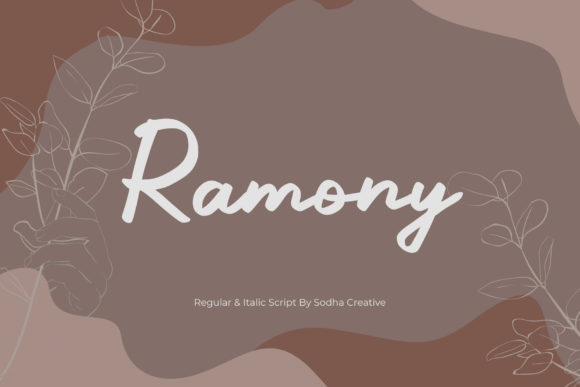
Ramony: A Handwritten Font That Elevates Design with Elegance and Flow
Ramony is a handwritten font that stands out for its elegant and flowing style, making it an excellent choice for a wide range of design applications. Its well-balanced characters offer a natural, organic feel that can transform any project from ordinary to extraordinary. Whether you're designing logos, stationery, book covers, or branding materials, Ramony brings a unique touch that sets your work apart.
What Makes Ramony Distinct?
Ramony is more than just another font; it's a tool that allows designers to convey personality and emotion through typography. The font's character shapes are carefully crafted to mimic the fluidity of handwriting, giving it a personal and approachable quality. This makes it ideal for projects that require a human touch, such as quotes, invitations, or creative branding.
One of the standout features of Ramony is its balance between legibility and artistic flair. Unlike some handwritten fonts that can be difficult to read, Ramony maintains clarity even in smaller sizes. This versatility ensures that it can be used effectively across various media, from print to digital platforms.
Comparing Ramony with Similar Fonts
When considering alternatives to Ramony, it's important to evaluate how each font performs in different contexts. While many handwritten fonts exist, each has its own unique characteristics and limitations. For example, some fonts may emphasize cursive elements more heavily, which can make them less suitable for formal designs.
Ramony offers a middle ground by combining the warmth of a handwritten style with the professionalism needed for commercial use. It avoids the overly decorative elements found in some scripts, making it more adaptable for a broader range of applications. This balance is particularly useful when working on branding projects where consistency and readability are key.
Strengths and Tradeoffs
The primary strength of Ramony lies in its ability to add a personal touch without compromising functionality. It works well in both digital and print formats, ensuring that your message remains clear and impactful. Additionally, its clean lines and balanced proportions make it easy to integrate into existing design systems.
However, like any font, Ramony may not be the best fit for every situation. If a project requires a highly stylized or ornate script, Ramony might not provide the desired effect. In such cases, exploring other options that prioritize visual complexity over simplicity could be more appropriate.
Best-Fit Situations for Ramony
Ramony excels in scenarios where elegance and flow are essential. Here are a few examples of where this font shines:
- Logos and Branding: Ramony can help create a memorable brand identity by adding a personal and sophisticated feel to your logo.
- Stationery and Invitations: The font’s organic appearance makes it perfect for wedding invitations, thank-you cards, and other stationery items.
- Book Covers and Magazines: Its readability and aesthetic appeal make it a great choice for titles and headings in publications.
- Quotes and Artwork: Ramony adds a sense of authenticity and charm to inspirational quotes or artistic compositions.
In each of these situations, Ramony contributes to a cohesive and visually appealing design while maintaining clarity and professionalism.
When to Consider Alternatives
While Ramony is versatile, there are instances where other fonts may be more suitable. For example, if you need a font with greater visual impact or more intricate detailing, you might explore alternatives like Copperplate or Brush Script MT. These options are better suited for highly decorative purposes but may lack the readability of Ramony.
Additionally, if your project requires a sans-serif or serif font for a more traditional look, you might consider pairing Ramony with a complementary typeface. This approach allows you to maintain the elegance of Ramony while ensuring overall design harmony.
Decision Factors to Consider
Choosing the right font involves evaluating several factors, including the purpose of your design, the target audience, and the medium in which it will be used. For instance, a font that looks stunning on a printed poster may not render as well on a mobile screen. Similarly, the tone of your message should align with the font's style—Ramony is ideal for messages that aim to feel warm, inviting, and personal.
Another consideration is the availability of supporting characters and languages. While Ramony supports a broad range of characters, it's always wise to confirm that it meets the specific needs of your project, especially if you're working with multilingual content.
Practical Examples and Applications
To illustrate how Ramony can enhance your designs, let's consider a few practical examples:
- Branding for a Lifestyle Blog: Using Ramony for the blog’s title and headings can create a welcoming and authentic vibe that resonates with readers.
- Designing a Coffee Shop Logo: Ramony’s flowing characters can give the logo a friendly and approachable feel, reflecting the café’s atmosphere.
- Creating a Magazine Cover: Pairing Ramony with a bold sans-serif font can provide contrast and visual interest while keeping the title readable.
These examples demonstrate how Ramony can be tailored to suit different design goals, offering flexibility without sacrificing its distinctive character.
In conclusion, Ramony is a valuable addition to any designer’s toolkit. Its elegant and flowing style provides a unique way to elevate your projects while maintaining clarity and professionalism. By understanding its strengths and limitations, you can make informed decisions about when and how to use it effectively.